Protect Garage Doors in Outages
A garage becomes a weak point when the opener is dead and the side door is dim. Walk it as a route from the street, not as storage.
How we reviewed this
Reviewed editorially from public vendor information; no hands-on testing claimed.
Quick answer
- Find the manual release
- Lock the side door
- Clear the path
The problem
During a long outage, a garage door opener becomes a dead weight and the side door becomes the real entry point. The garage also holds ladders and tools that could help someone reach a window. Securing it is mostly about mechanics and habits, not expensive hardware. The first time you need the manual release should not be during a storm, and the first time you notice a weak side-door latch should not be after someone has tried it. A ten-minute daylight inspection removes both surprises. Garages are also easy to neglect because they feel separate from the house. If the interior door is solid but the side door is weak, the garage becomes a bypass. Walk from the street to the house once and look at it as a route, not as a storage room. Walk the route twice, once in daylight and once with a low lamp. The second pass reveals what you cannot find by touch.
Step-by-step
- Learn the manual release: Find the release cord and practice lowering and lifting the door by hand. Do this before an emergency. Note whether the door is heavy enough that another adult should help you.
- Lock the side door: Check the frame and latch. Add a brace only if it can be removed from inside quickly. A stiff latch in a dark garage is a common reason people leave a door unsecured.
- Control access to tools: Close and lock tool cabinets. Move ladders away from exterior walls and windows. This is a small change that removes the most obvious ladder against the most obvious window.
- Add light with a timer: A battery lantern near the interior door discourages blind movement and helps you see the latch. Use low, directed light rather than flooding the whole garage.
- Keep the path clear: Do not store boxes in front of the release mechanism or the side door. Clear one straight path from the house door to the vehicle before the outage, not during it.
Where a product fits
A kit with braces and portable light can help, but measure the side door first. The manual release skill is free and more valuable than any add-on. If you buy a brace for the garage, practice fitting it until your hands know the motion; in the dark, muscle memory beats instructions. Keep the kit inside the house where adults can reach it quickly rather than in the garage itself. If you add a kit, keep it on the house side of the garage door. In an outage you may need the lamp before you can safely reach the release, and a kit stored behind a dark door is not much use. A small lamp clipped near the interior door is often the best first purchase. If the garage shares a wall with the house, check that any barrier you add does not block an interior exit.
Verdict
The free manual-release skill matters more than any add-on. Keep the kit on the house side and practice the route by low light.
Frequently asked questions
Why is the garage a weak point?
Large doors, side entrances, and stored tools make garages attractive targets, and openers stop working without power. A dark garage also hides movement, so light matters as much as locks. A practised release should take seconds, not a search online by phone light. Practise once with the car outside so the path is clear.
How do I open the door during an outage?
Know the manual release location and practice it. Do not rely on a stored ladder you cannot find in the dark. Practice once with the door closed so you know how much force is needed. A brace on a side door must be removable from inside in seconds; fire safety comes first. Practise with the door closed; an open door teaches you nothing.
Should I secure side doors?
Yes. Side doors are often less visible from the street. Check locks and add a simple brace if the frame allows it, and make sure it releases quickly from inside. Keep the cabinet key on a hook you can find by touch. A side-door brace is only useful if you can reach it without crossing the garage.
What about tools inside?
Lock tool cabinets and keep ladders away from exterior access points. This reduces both opportunity and risk, and it makes the garage easier to navigate when the power is out.
Back to Home Security & Preparedness
Keep reading
Related offer
Anti-Looter Kit - BRAND NEW!
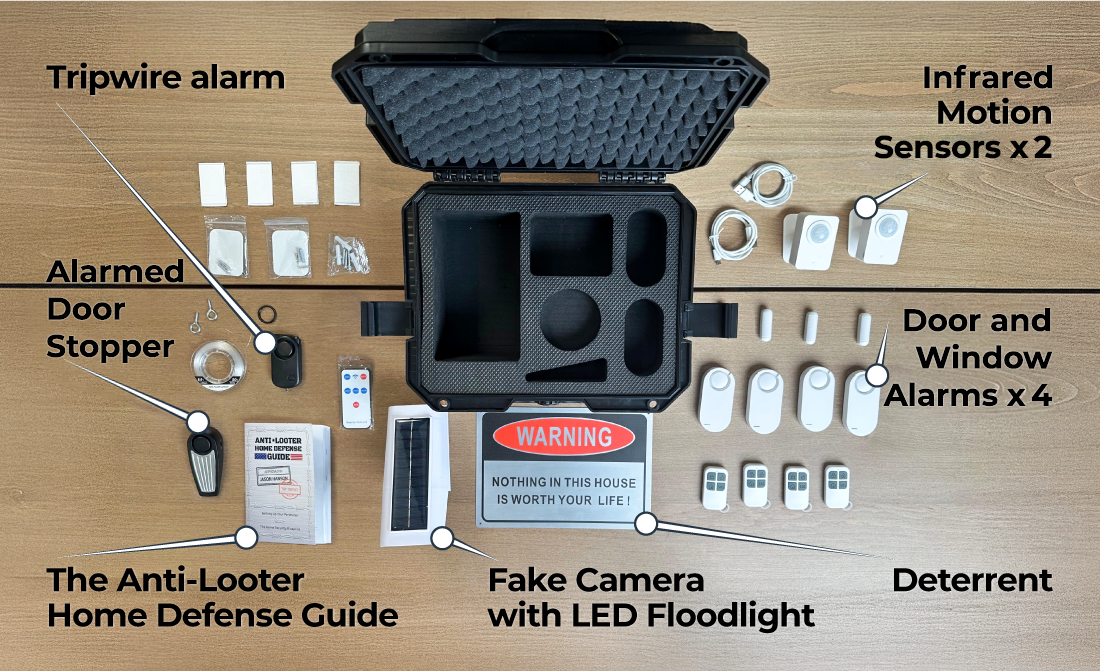 Explore Anti-Looter Kit - BRAND NEW!