Anti-Looter Kit Review: Price & Limits
A kit is useful when it turns a vague worry into a short checklist. It is not a bunker plan; it is a set of barriers, light and alerting you have practiced using.
How we reviewed this
Reviewed editorially from public vendor information; no hands-on testing claimed.
Quick answer
- Measure entry points first
- Practice installing in daylight
- Add a contact sheet
What it is
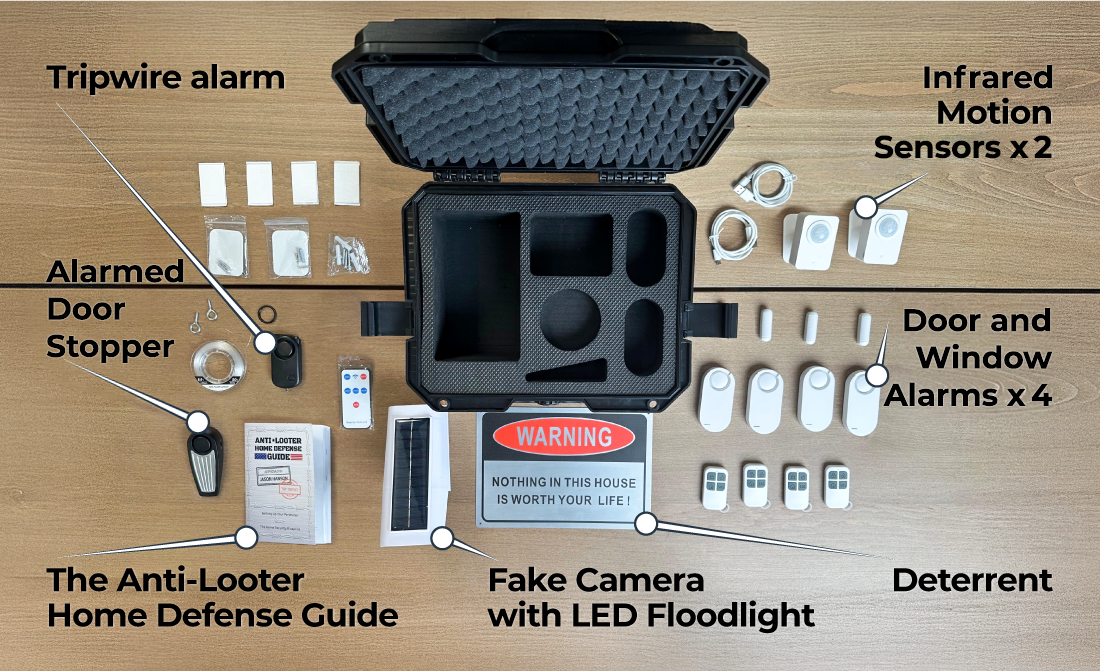
An anti-looter kit is a bundled set of home-security basics intended for blackouts, civil disruption, or extended neighborhood outages. Typical kits combine door braces, window or sliding-door locks, a portable light, and a simple alert device. The idea is not to fortify a house like a bunker. It is to make quick, opportunistic entry harder and to help you notice activity when the grid is down. That is a useful, bounded promise, and it should be judged on whether the pieces fit your actual doors and windows. The bundle also functions as a checklist. It reminds you that barriers, light, alerting, and communication are separate jobs, and that neglecting one of them leaves a gap. A simple kit you have installed in daylight is worth far more than an impressive list of gear you have never touched.
Pros and cons
What works
- Bundles commonly needed items so you do not forget a whole category when you are stressed or shopping in a hurry.
- Physical barriers work even when power and Wi-Fi are unavailable, which is exactly when electronic systems may fail.
- Portable lighting improves visibility without relying on mains power and helps you move through a familiar room safely.
- A checklist format makes it easier to practice setup in advance and to hand the plan to another adult in the household.
Limits
- Fit varies by door and window type; measure before buying and return anything that cannot be installed quickly from inside.
- Batteries and consumables need periodic replacement, so a kit bought once and forgotten will eventually include dead cells.
- No kit replaces working locks, situational awareness, or a clear rule about when to call emergency services.
Price, guarantee, and who it is for
Price: Check the current offer page for the exact price and contents. Treat the cost as a convenience fee for a curated bundle rather than as a discount. If you already own most items, a DIY checklist may be cheaper; if you are starting from zero, the bundle saves research time and reduces the chance of buying the wrong brace twice. Compare the listed total with the cost of the individual pieces before you decide which route is genuinely cheaper.
Guarantee: Read the vendor's current refund and shipping terms before checkout. Because fit matters, confirm that you can return unused items if a brace or lock does not suit your entry points. Test everything on the day it arrives, not during the first outage; a return window is only useful while you still have time to use it.
Homeowners and renters in areas with outage risk, people who want a simple starter kit, and anyone who prefers a checklist over assembling gear from scratch. It is less useful for households that already maintain a tested security setup. If nobody in the home is willing to practice installation twice a year, buy less hardware and spend more time on the written plan.
Verdict
Buy it as a starter layer after measuring your doors and windows. It buys time and visibility, not certainty, and it still needs a written call plan.
Frequently asked questions
Does an anti-looter kit guarantee home safety?
No. It is a collection of practical barriers, lighting, and alert tools. It can slow down opportunistic entry and improve awareness, but it cannot stop a determined intruder. Treat it as one layer alongside locks, neighbour awareness, and a plan to call for help.
Is it useful outside emergencies?
Yes. Door braces, window locks, and portable lights are useful for everyday security too. The emergency framing simply makes the checklist easier to follow. A kit that sits in a cupboard until a storm is a kit you have not practiced using.
What should I check before buying?
Confirm the current contents, compatibility with your doors and windows, and whether batteries or replacement parts are included. Measure the gap on a sliding track or door frame before you rely on a brace that may not fit.
Should I skip it if I already have alarms?
Not necessarily. Alarms notify; physical barriers delay. The two solve different parts of the problem. If you already own barriers and lights, skip the bundle and spend the budget on a written plan and monthly test instead.
Back to Home Security & Preparedness
Keep reading
Related offer
Anti-Looter Kit - BRAND NEW!
 Explore Anti-Looter Kit - BRAND NEW!